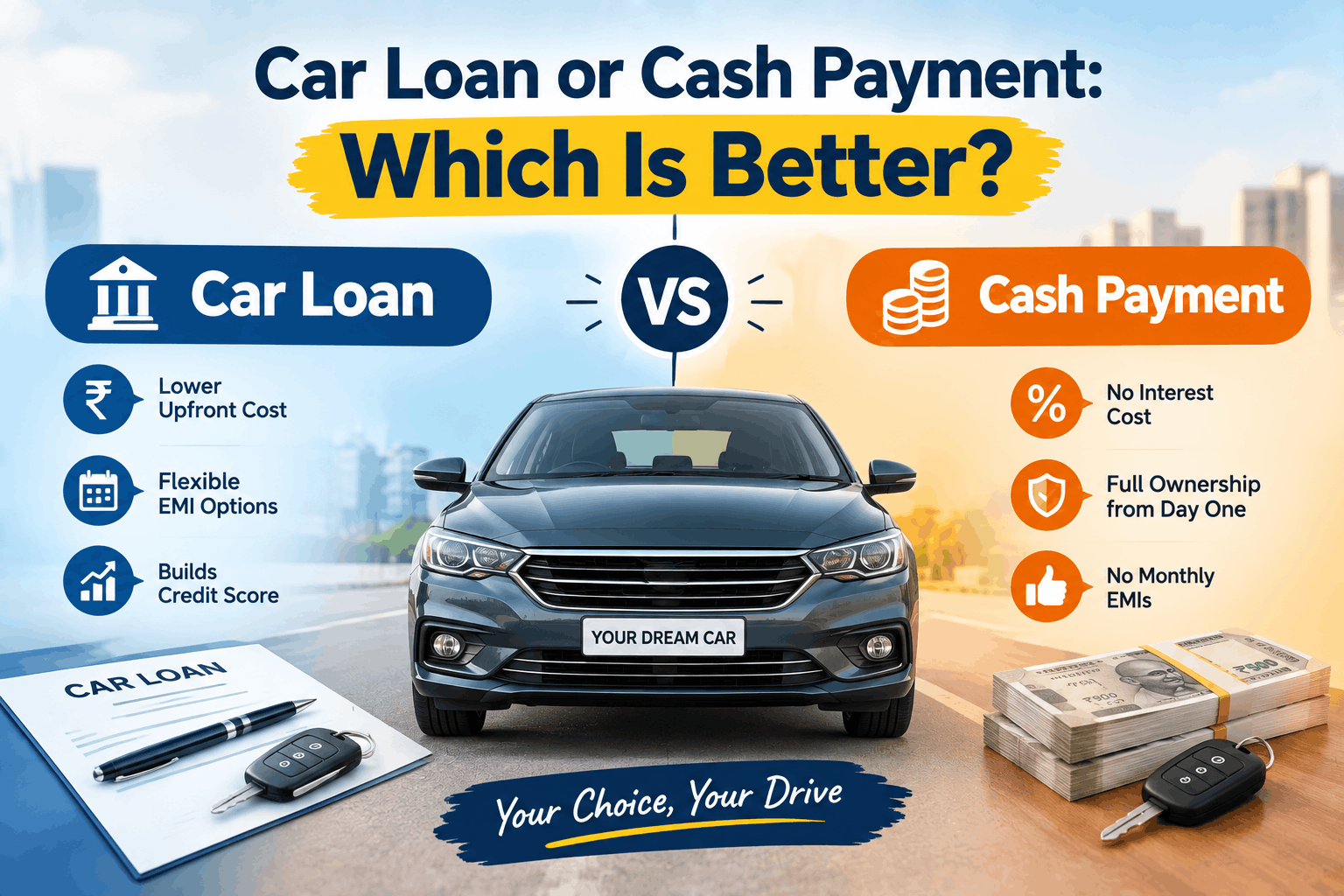
Car Loan or Cash Payment: Which Is Better?
Buying a car is a major financial decision. Once you have selected the car you want, the next question is how you should pay for it. Should you pay the entire amount in cash, or should you take a car loan and pay through monthly EMIs?
Both options have their own advantages and limitations. Cash payment can help you avoid loan interest and monthly financial commitments, while a car loan allows you to keep more of your savings available for other needs. Your income, savings, existing expenses, and future financial goals should all be considered before making a decision.
You should also remember that buying a car involves expenses beyond its purchase price. Registration, maintenance, fuel, repairs, and car insurance in Ghazipur can add to the overall cost of owning a vehicle.
Let us understand both payment options and the factors you should consider before choosing one.
What Does Paying for a Car in Cash Mean?
Paying in cash means buying a car using your savings instead of taking a loan. You avoid interest and monthly EMIs, making ownership simpler.
However, using a large portion of your savings can leave less money for emergencies, investments, and other expenses. So, having enough savings doesn't always mean paying the full amount upfront is the best option.
What Is a Car Loan?
A car loan allows you to purchase a vehicle by borrowing money from a bank, NBFC, or other financial institution. Instead of paying the complete cost upfront, you repay the borrowed amount through monthly EMIs over an agreed period.
The loan generally includes interest, which means the total amount paid over the loan period can be higher than the car's original purchase price.
However, a car loan can make it easier to buy a vehicle without using a large portion of your savings. You can keep some money aside for emergencies and other financial goals while managing the car cost through regular payments.
Before taking a loan, you should compare the interest rate, processing charges, tenure, down payment, and total repayment amount.
Cash Payment vs Car Loan: Understanding the Difference
The main difference between cash payment and a car loan is how the cost affects your finances.
With cash payment, you spend a significant amount immediately but avoid interest and future EMIs. With a loan, you preserve some of your savings but take on a regular financial commitment.
For example, imagine a car costs ₹8 lakh. If you pay the complete amount from your savings, you will not have a loan or interest expense. But your savings will reduce by ₹8 lakh.
If you finance part of the purchase, you may pay a down payment and borrow the remaining amount. Your savings remain higher, but you will need to make monthly EMI payments and pay interest.
The right option depends on which financial structure is more comfortable for you.
Advantages of Paying for a Car in Cash
Cash payment can be attractive because it keeps the purchase straightforward. You pay for the vehicle and do not have to worry about loan approval, documentation, or monthly EMIs.
Another important benefit is avoiding loan interest. This can reduce the overall cost of purchasing the car.
Cash ownership can also provide greater financial flexibility after the purchase because you do not have a monthly car loan obligation. You can use your monthly income for other expenses, investments, or savings.
However, it is important to keep money aside for future ownership costs, including servicing, unexpected repairs, fuel, taxes, and car insurance in Ghazipur.
Disadvantages of Paying in Cash
The biggest concern with cash payment is the reduction in your savings. A car is a depreciating asset, so using a large portion of your wealth to purchase one may not always be financially suitable.
For example, if you have ₹10 lakh in total savings and spend ₹8 lakh on a car, you may have only ₹2 lakh left for emergencies and other requirements.
This can become a problem if you suddenly face an unexpected expense. Therefore, you should avoid using all your available savings simply to avoid taking a loan.
It is generally important to maintain an emergency fund even after making a large purchase.
Advantages of Taking a Car Loan
The biggest advantage of a car loan is that you do not have to pay the complete car price upfront. You can make a down payment and finance the remaining amount.
This allows you to retain more of your savings for emergencies, investments, education, business requirements, or other financial goals.
A car loan can also make a higher-priced vehicle more affordable in terms of monthly cash flow. Instead of making one large payment, you spread the repayment over several months or years.
However, you should make sure the EMI fits comfortably within your monthly budget. Your car expenses should not put unnecessary pressure on your regular income.
Disadvantages of Taking a Car Loan
The main disadvantage of a car loan is interest. Since you are borrowing money, the total amount you repay will generally be higher than the amount borrowed.
A longer loan tenure may reduce the monthly EMI but can increase the total interest paid over the repayment period.
You should also consider processing fees and other applicable charges before choosing a loan. Missing EMI payments can create additional financial problems and may affect your credit history.
Apart from the EMI, remember to budget for fuel, maintenance, parking, repairs, and car insurance in Ghazipur when calculating the actual monthly cost of owning a car.
When Is Cash Payment a Better Option?
Paying cash can work well if you have strong savings. In that case, you can buy the car without squeezing your emergency money or your other plans.
For instance, if your savings cover the car price and you still keep a safe amount set aside, paying cash may help you skip loan interest.
It may also make sense for buyers who strongly prefer having no monthly debt obligations.
However, do not use all your savings just to make a car purchase debt-free. Your financial safety net should remain a priority.
When Could a Car Loan Be a Practical Choice?
A car loan can be useful when paying the full price upfront would significantly reduce your savings.
If you have a stable income and can comfortably manage the EMI, you can make a suitable down payment and finance the remaining amount while keeping some savings for emergencies.
However, consider the total loan cost, including interest and charges, along with fuel, maintenance, servicing, and car insurance in Ghazipur.
Is Financing an Option for a Used Car?
If you're planning to buy a pre-owned vehicle, financing can be an option instead of using all your savings.
Before purchasing, check the car's age, condition, service history, ownership, insurance, registration, and other documents. Also keep a budget for repairs, tyres, servicing, transfer charges, and car insurance in Ghazipur.
Platforms like CarKharidoBecho24 can help you explore used cars that fit your budget and requirements.
Why Should You Consider Car Insurance?
Insurance is an important cost when buying a new or used car and may be required when financing a vehicle.
Premiums vary based on factors such as the car model, age, location, coverage, and insurer. If you're buying a car in Ghazipur, compare car insurance in Ghazipur based on coverage, exclusions, deductibles, add-ons, and claim process—not just the lowest premium.
Cash or Car Loan: How Can You Choose?
The right choice depends on your financial situation, not just the car’s price. Review your savings, income, expenses, emergency funds, and existing commitments before deciding.
If paying in cash leaves enough savings, you can avoid loan interest and extra costs. If it uses most of your savings, financing part of the cost may offer more flexibility.
For a loan, compare interest rates, processing fees, tenure, down payment, and total repayment—not just the EMI. Also include fuel, servicing, repairs, car insurance in Ghazipur, and other running costs in your budget.
Final Thoughts
Buying a car with cash can help you avoid loan interest, while financing allows you to divide the purchase cost into manageable monthly payments and preserve some of your savings.
Your decision should be based on your income, available savings, monthly budget, and future financial requirements. Before finalising your purchase, consider the vehicle price, loan terms, ongoing ownership expenses, and car insurance in Ghazipur so you can plan your car purchase responsibly.
FAQs
1. Is buying a car with cash less expensive than using a loan?
Yes. Cash purchases can help you avoid loan interest and financing charges.
2. When can a car loan be useful?
A car loan can help you keep some savings available while paying through EMIs.
3. Should I spend all my savings on a car?
It is better to keep enough savings for emergencies and unexpected expenses.
4. Does a car loan include insurance costs?
Usually, insurance is separate, but lenders generally require valid insurance.
5. What factors should I compare before taking a car loan?
Compare the interest rate, EMI, tenure, fees, down payment, and total repayment.
6. Can used cars be purchased through financing?
Yes. Used-car financing is available based on the lender, vehicle, and borrower’s eligibility.
7. Is motor insurance compulsory in India?
Yes. Third-party motor insurance is mandatory for vehicles on public roads.
8. What should I look for in car insurance in Ghazipur?
Check coverage, exclusions, deductibles, add-ons, claims, and premium before choosing car insurance in Ghazipur.
9. Which is better: a short or long car loan tenure?
A shorter tenure may mean higher EMIs but lower total interest, while longer tenure reduces EMIs but may increase interest.
10. Where can I search for used cars in Ghazipur?
You can check platforms like CarKharidoBecho24 for used-car listings based on your budget and needs.