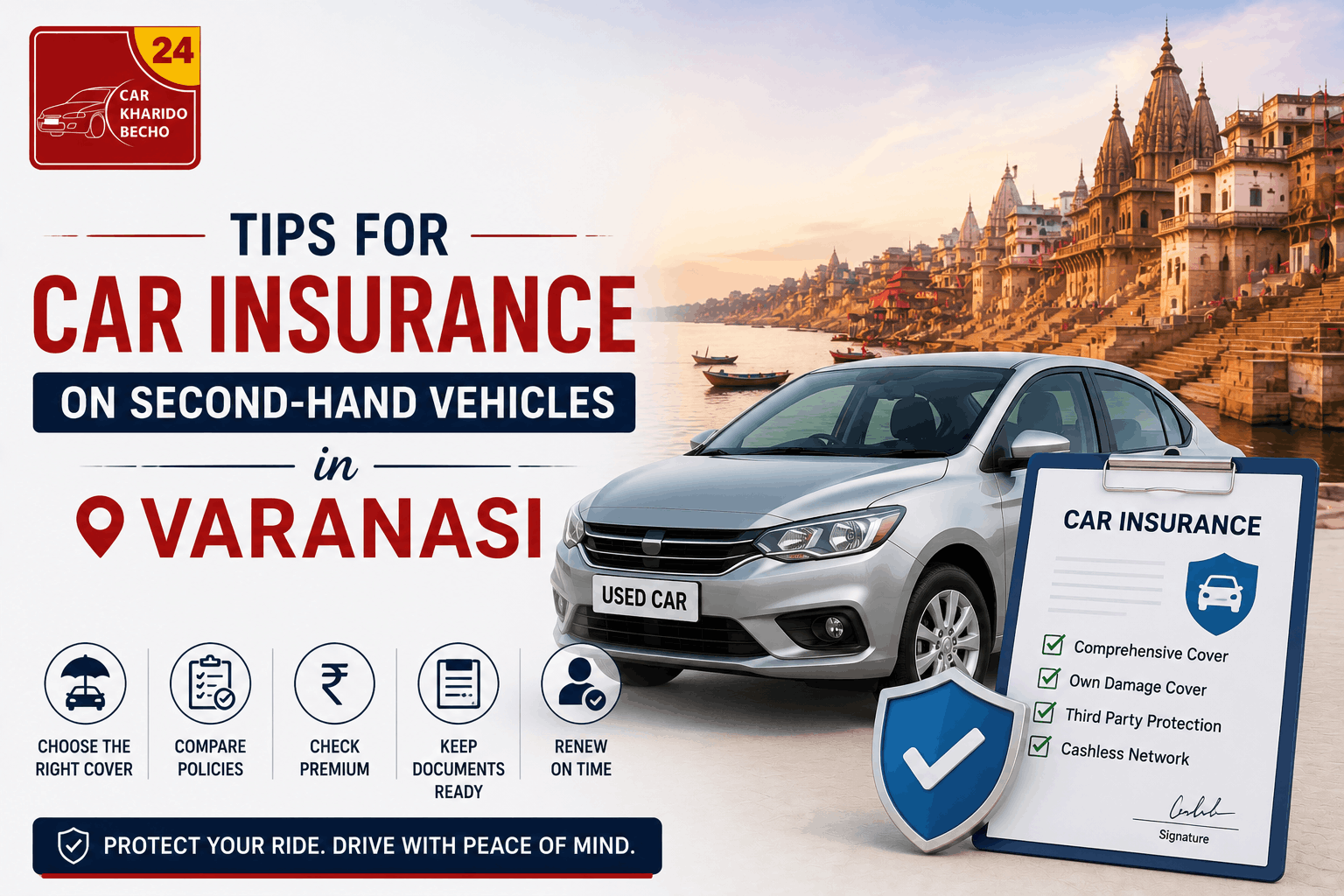
Tips For Car Insurance On Second-Hand Vehicles In Varanasi
Buying a used car can be a smart way to own a vehicle without spending too much money. In a city like Varanasi, where people use cars for daily commuting, family travel, and business purposes, second-hand cars are becoming a popular choice. However, buying the car is only one part of the process. You also need to make sure that the vehicle has proper insurance.
Understanding second hand car insurance is important before you complete your used-car purchase. The right insurance policy can protect you from unexpected expenses caused by accidents, theft, natural disasters, and other risks. At the same time, choosing the wrong policy can result in unnecessary costs or problems during claim settlement.
If you are planning to buy a pre-owned car in Varanasi, here are some useful tips to help you handle car insurance properly.
Check the Existing Car Insurance
Before buying a second-hand vehicle, ask the seller for details of the existing insurance policy. Check whether the policy is still active and find out when it expires.
You should also check the type of insurance the car currently has. A third-party policy provides coverage for damage or injury caused to another person or their property. Comprehensive insurance offers wider protection and generally covers the insured vehicle against risks such as accidents, theft, fire, and certain natural disasters.
Do not assume that the existing policy automatically becomes yours after purchasing the car. The insurance policy needs to be transferred to the new owner according to the insurer's process.
Transfer the Insurance Policy to Your Name
One of the most important steps after purchasing a used car is transferring the insurance policy. The name on the insurance document should match the registered owner of the vehicle.
Contact the insurance company and submit the required documents for ownership transfer. Depending on the insurer, you may need documents such as the registration certificate, sale documents, existing insurance policy, and identity or address proof.
Completing the transfer on time can help avoid complications when you need to make an insurance claim.
Compare Different Insurance Options
Don't simply renew the policy that comes with the car without checking other options. Take some time to compare different second hand car insurance plans.
Look at factors such as premium, coverage, deductibles, add-on options, claim process, exclusions, and insurer reputation. A cheaper policy may not always provide the best value if it offers limited coverage.
Comparing policies can help you find protection that suits your car, budget, and driving requirements.
Check the Car's Insurance History
The insurance history of a used car can provide useful information about its past. Ask the seller whether the vehicle has previously been involved in major accidents or insurance claims.
Frequent claims may indicate that the vehicle has experienced repeated damage. You should also check whether there are any unresolved insurance-related issues.
If possible, verify the information through available vehicle and insurance records before completing the purchase.
Understand the Insured Declared Value
The Insured Declared Value, commonly known as IDV, is an important factor in comprehensive car insurance. It represents the approximate insured value of the vehicle and is generally considered when calculating the maximum amount payable in certain total-loss or theft situations.
For a second-hand car, the IDV is usually lower than the price of a new vehicle because of depreciation.
When selecting a policy, don't focus only on the lowest premium. Check whether the IDV is reasonable for the vehicle and its current market value.
Consider Comprehensive Coverage
For many used-car owners, comprehensive insurance can be worth considering because it provides broader protection than third-party insurance alone.
Third-party insurance is legally required for cars driven on Indian roads, but it does not cover damage to your own vehicle. Comprehensive coverage can provide protection against several risks, depending on the policy terms.
For a valuable second-hand car, broader coverage may provide greater financial protection in case of an unexpected incident.
Look at Useful Add-On Covers
Insurance companies offer different add-ons that can increase the protection provided by a policy. However, you don't necessarily need every available add-on.
Depending on the age and condition of your used car, you may consider options such as zero depreciation cover, roadside assistance, engine protection, or consumables cover, where available and appropriate.
Before selecting an add-on, understand what it covers and whether the additional premium is worthwhile for your vehicle.
Check the No Claim Bonus
The No Claim Bonus, or NCB, is a discount offered to eligible policyholders for not making claims during the previous policy period.
If you are buying a used car, ask about the existing policy's NCB. Keep in mind that NCB is generally associated with the policyholder rather than the vehicle, so it may not automatically transfer to the buyer.
Understanding this before purchasing the car can prevent confusion when you arrange your own insurance.
Inspect the Car Before Buying
Insurance should not be the only thing you check when purchasing a used vehicle. A proper inspection is equally important.
Check the engine, brakes, tyres, suspension, electrical systems, body condition, and interior. Look for signs of accident damage, flooding, rust, or major repairs.
A professional inspection can be particularly useful if you don't have much experience evaluating used cars. The condition of the vehicle can also influence your insurance requirements and future maintenance expenses.
Verify All Vehicle Documents
Before buying a second-hand car in Varanasi, carefully check the vehicle documents. Make sure the registration certificate, insurance policy, pollution certificate, and other relevant documents are available and consistent.
Also verify that the seller's details match the vehicle records and that the ownership transfer is completed properly.
Avoid buying a vehicle simply because the seller offers an attractive price. Proper documentation can save you from significant problems later.
Don't Ignore Policy Exclusions
Every insurance policy has exclusions. These are situations where the insurer may not provide coverage.
Before purchasing second hand car insurance, read the policy terms carefully. Understand what is covered, what is excluded, the deductible amount, claim conditions, and the documents required during a claim.
For example, normal wear and tear is generally not covered under standard motor insurance. Similarly, claims can be affected if policy conditions are not followed.
Knowing these details in advance can help you avoid unpleasant surprises.
Choose a Reliable Insurance Provider
The insurer you choose can make a major difference when you need to make a claim. Don't select an insurance company based only on the lowest premium.
Consider the insurer's claim process, customer support, network of cashless garages, policy features, and overall reputation.
A reliable insurer can make the process easier when your vehicle needs repairs after an accident or other covered event.
What Documents Are Usually Required?
When transferring or purchasing insurance for a second-hand car, you may need several documents. These can include the vehicle's registration certificate, existing insurance policy, sale or transfer documents, identity proof, address proof, and other documents requested by the insurer.
The exact requirements can vary between insurance companies. It is better to confirm the document list with your insurer before starting the transfer process.
Why Is Second Hand Car Insurance Important?
A used car can still be exposed to the same road risks as a new car. Accidents, theft, fire, floods, and other unexpected events can result in significant expenses.
Having suitable insurance can reduce the financial burden associated with covered incidents. It also helps you meet the legal requirement for third-party motor insurance in India.
For someone purchasing a used car in Varanasi, getting the insurance sorted early should be an important part of the buying process.
Final Thoughts
Buying a second-hand car in Varanasi can be a smart choice, but insurance should not be overlooked. Check the existing policy, transfer it to your name, compare plans, and choose second hand car insurance that offers the right coverage at a suitable cost.
At CarKharidoBecho24, we help buyers make informed used-car decisions by considering the vehicle's condition, documents, ownership, and insurance requirements.
FAQs
1. Is insurance mandatory for a second-hand car in India?
Yes. Third-party motor insurance is mandatory.
2. Can second hand car insurance be transferred?
Yes. It can be transferred to the new owner with the required documents.
3. Should I buy comprehensive insurance for a used car?
It depends on the car's age, value, condition, and your needs.
4. What if I don't transfer the insurance?
It may cause problems during the claim process.
5. Does the No Claim Bonus transfer?
No. NCB generally belongs to the policyholder, not the vehicle.
6. Can I change my insurance company?
Yes. You can choose another insurer at renewal.
7. What is IDV in car insurance?
IDV is the insured value of the vehicle used for certain claim calculations.
8. Are add-on covers necessary?
Not always. Choose add-ons based on your car and requirements.
9. Can old used cars be insured?
Yes. Coverage and premiums depend on the vehicle's age and condition.
10. What should I check before buying a used car in Varanasi?
Check its condition, documents, insurance, ownership, service history, and accident records.